

From the storm of despair to unwavering glory
The Black Sword
The Incredible True Story of One Man's Fight Against Obesity and Addiction to Becoming a Champion
Videos · Phil's story
Phil speaks alone in this episode about battling addiction, drawing on his more than 20 years of alcohol addiction and his ongoing struggle with food addiction. He describes a typical day as a functional alcoholic, working hungover and then drinking 24 to 30 beers while binge eating at night. He explains that he quit cold turkey, began AA meetings, a sponsor and the 12-step program after about a year sober, and stresses admitting the problem and leaving people who drag you down. He closes by saying change is possible and invites viewers to message him for help.
Watch on YouTube or listen on Spotify.
To me, addiction is not having the impulse control to stop doing something that's causing us pain or suffering or causing some sort of loss or problem in our life.
04:44
I want that to be scary. I want that to sound extreme.
18:15
It's courageous. When you have a problem, you can work through it with the right people around you, with people who know how hard you're trying and how hard you're fighting.
19:18
If there's something that's dragging you down, something that's keeping you from being the best version of you, kill it. Get rid of it at any cost.
20:20
If I could do this, anybody can. I've taken people in that never believed they can change, and they have changed, and they are doing wonderful.
20:50
From YouTube's automatic captions, so a few words may be wrong.
00:01 This is not a comfort podcast. This is a confrontation. If you're looking for soft motivation, easy answers, or permission to stay the same, this isn't for you. This is for those who've been overweight, addicted, broken, finally tired of making peace with their own excuses. Here, we choose discipline over comfort, faith over feelings, action over intention. We train the body, sharpen the mind, and rebuild the spirit one hard decision at a time. This is
00:31 where the old you ends and the strong one is earned. This is the Body by Phil podcast. Hi, welcome back to the Body by Phil podcast. This is Phil. Before I begin, I like to thank everybody for tuning into this podcast. When I started this a little over a month ago, I actually really had no idea that it would turn out to be as popular and as big as it has become. So, thank you for that and please like and subscribe to this
01:04 podcast so you can stay up to date with my my new things coming up, my new episodes coming up. I got a lot of new exciting content coming, a lot of really really incredible guests are are going to be appearing. And like I said, our last episode got almost 4,000 views in just a matter of four or five days. So, again, thank you very much for for tuning in. And I hope that these podcasts help with inspiration and and giving you hope in some of these topics
01:35 that we we cover. Today's topic is a very near and dear topic for me and it it's all about battling addiction. Addiction means something different to everybody and I think in a lot of ways there's kind of a stigma associated to the term addiction. When I talk about all these things when it comes to fitness, when it comes to nutrition, when it comes to battling adversities and addictions, I'm applying them to my personal experiences because it's really
02:07 what I know best. And through these experiences, I have been able to help other people come out of their addictions and help them find confidence and find faith and hope in their ability to to change against odds. And it all started with with my own my own addictions, my own poor impulse control problems, and not having any belief in myself that change was ever really on the horizon or that change was even a possibility for me. I really didn't
02:38 believe that that would ever really happen. And I'm not even sure at some points in my life that I really wanted it to happen. So, when I talk about these things, bear in mind that addiction is not a one-size-fits-all. It attacks us all very, very personal. And the approaches to beat addiction and to handle addictive traits is going to be dependent on you. What I'm going to do and what I do and I talk about this in my book. People have asked me to mention this, too, because I wrote a
03:10 book last summer and it's called The Black Sword. And I'm going to have links associated with with this on how you can actually get a copy of this yourself in the comments below. And I'm actually going to be doing a podcast that's that's really going to talk more in-depth about what this book, The Black Sword, is about and and how that came to be and how it is helping um change a lot of people's lives right now. So, I'll get into more of that later. But beating addiction, first of all, what is
03:40 addiction? We we hear it thrown around out there all the time. Like I said, there's a stigma related to it. And I think probably the first thing we think of when we think of addiction is the obvious. It's drugs and alcohol, which I suffered from an alcohol addiction for over 20 years. But, I also dealt with and struggled and still struggle with food addiction, which I didn't even know it was a thing even when I was massively obese in my 300s, consuming large large amounts of food. I really didn't associate that with an
04:12 addiction until I cured myself of both the alcohol and and the food addictive personalities. So, addiction, especially when it comes to food. Drugs and alcohol, we we can we can relate to that and say, "Yeah, I know all about drugs and alcohol being addictive." But, food, I got to tell you, since I haven't had a drink now in going on 15 years, and that has become really quite manageable for me. What I still struggle with is the impulse of food, and I think because it's so readily available and it's so
04:44 accepted in our society, obesity has become something that is a major concern country and global, that we've just kind of taken it for granted. So, what is addiction? To me, addiction is not having the impulse control to stop doing something that's causing us pain or suffering or causing some sort of loss or problem in our life. When I went through my alcohol addiction, let me
05:15 just give you an example of what a day in the life of me was like. I'd wake up early, more often than not hungover, and go to work. I would work all day. During lunch, I would eat mass amounts of fast food. That was my go-to or some other type of processed foods. And, I used to get off work around 3:00 in the afternoon. By 2:00, sometimes earlier, my hands would start to tremble and shake because I knew what was coming up very soon was going to be my alcohol fix
05:47 and my abusive eating habits. When I would get off work, I would go home and I would start consuming alcohol. Um it started with, you know, the normal, you know, six-pack of beer or a 12-pack of beer. But over the years, and as time progressed and your tolerance goes higher, those sorts of um numbers have to be increased. So, from going from 12 beers to 24. I remember when a Keystone Light actually came out with a 30-pack of square cube uh
06:19 30-pack, and I used to buy those, you know, when 24 beers just isn't enough. You know, turn to the 30-pack. Now, you know, there's there's a ton of carbohydrates and and empty calories in each one of these beers. So, you know, when you're drinking 30 of them, you're getting more than a daily total of your food consumption just in this carbohydrate alcoholic beverage. So, you can see how the weight will start to come on pretty quick with this sort of diet. Now,
06:50 speaking of diet, as I'm consuming these 25 and 30 alcoholic beverages, there's a lot of bad food going along with this. I used to have all kinds of, you know, snack food, bad stuff, fried raviolis, you know, all of the chips and cheeses and you know, all just really bad stuff, fast food, you know, and I would be binging on this stuff all night while I'm consuming and drinking large quantities of alcohol. And
07:20 then you know, this would go on until the wee hours in the morning, and then I would wake up. I would feel hungover, sick, purge. I would, you know, run to the toilet, throw up, take a shower or not, and then go off to work. And repeat this pattern, this destructive behavior, for years. I did this for 20 years. You know, I was always able to hold a job. I was becoming what I know now to be a functional alcoholic. And you would just
07:52 get into this rut, this circle of nothing would change. The pattern was the same. This was day in and day out. The only time that this pattern would break is if I was physically too sick to consume any more alcohol. You know, where I would need a night off or a day or two from that pattern, usually to sleep and recharge, and then go right back into those destructive beha- behaviors again. I think it's important to mention that in this time period, the people that are in my life are the
08:24 like-minded addictive abusive type people. When you're this far into your addiction, you don't really associate too much with people that aren't doing what you're doing. Because then comes the judgmental phase. You know, people say, you know, you shouldn't be doing this so much or you know, it's this is unhealthy or look at how much weight you're gaining from from this unhealthy eating and this alcohol indulgence, you know. And you really don't want to hear that. I know I certainly didn't. So when I would hear these sort of things, I
08:54 would just simply absence myself from the people that were going to judge me and keep the people around me that were doing like-minded behaviors. So that's kind of a little glimpse of what my addiction was. And people say, well, you know, you have to, in order to break an addiction, you have to want change. You have to first admit that you have a problem. In fact, that is the first step in AA or even in NA, any kind of addiction recovery, is admitting you have a problem. Now, there's a big difference between knowing that you have a problem and admitting that you have a
09:26 problem that needs to change. I knew that what I was doing wasn't healthy and I knew it wasn't right. But it wasn't important enough to me to make the lifelong change, to have the guts to say, "Okay, I'm going to do something about this." I knew it wasn't right. I knew that it was hurting people and I especially myself, but you get so far into that world and so far into that denial that all you know is giving in to the indulgence, the addiction. When the urge comes, you can maybe fight it for a
09:58 little bit, but overall, you give in. Why? Well, this has become your pattern. If If all your brain and body knows is that inevitably you're going to go back to what it is you're craving and your impulse control isn't there to resist that urge, then that becomes your pattern. You will say, "Okay, maybe I'm not going to drink today." And and that'll go on for a while, but then as soon as the hands shake and you start really wanting that, you give in. You give in to the desire and and there you
10:30 go. So, that's what that's what your brain and your body has learned. And for me, it learned it over a 20-year period. So, I think for me, whenever I would really say, "Okay, I need to make a change." It was always for the wrong reason. It was because I was hung over, I'm throwing up in a toilet, I feel sick at work all day, my head is pounding. You know, so the physical part of me said, "Okay, I I really don't want to do this." But as soon as that wore off, as soon as that it was time to party up again and go back after it, you know? And again, even with the alcohol, there
11:00 there always came food. Food was always a part of my life. Not the good stuff, either, you know? Just the really, really bad. And the portion controls just weren't there. This also became a pattern and this became an addiction. My My body and my brain would crave these items, alcohol and fast food, because in the moment it feels good. I liked drinking. What I liked about drinking, I liked the feeling it gave me. I liked it you know, it made me almost feel like a
11:31 different person at times. And by nature, I was a very shy, you know, guy, you know, the guy in the back of the room, didn't say too much, and very backward. But through alcohol, it kind of gave me kind of another personality. It let me be a little bit more forthcoming. It gave me a little bit of what they call liquid courage. I could approach people and talk to them and become funny and joke and laugh. And you know, these things were all temporary because as soon as all of that wears off, the real you is still there. All
12:03 the problems that were associated with alcohol were just compounded by more alcohol. So, my pattern became escaping the current reality. My problems that were all self-inflicted, brought on by food addiction, overeating, obesity, my health is in jeopardy, would be forgotten by drinking vast amounts of alcohol because then you're kind of numb to it all. Problem is, these are temporary. As soon as all of that wears off, all the problems are still there,
12:35 and you've created more. Maybe you've got into an altercation. Maybe you've hurt yourself. Maybe, you know, just from all of the years of doing it, your health is starting to deteriorate, which was my case. And I go into more detail of that in my book. So, how do you come out of it? Well, you kind of come out of it the same way you go into it by creating and breaking the cycle of bad behavior. This is hard to do. This is really hard to do. And I quit cold turkey, but that was difficult. I didn't
13:07 know about AA and all the I mean, I knew about AA, of course, but I didn't attend AA meetings until after I was about a year sober. And the relapses, you know, were starting to become a concern. And that's when I I knew I didn't want to go back to my old ways. So, I started attending meetings and getting a sponsor and doing the 12-step program, which was incredible and I highly recommend this. What's interesting about the 12-step program is that it can apply to any addiction. The any impulse control
13:38 problem. I mean, it could be gambling. It could be food. It could be alcohol. It could be drugs. It could be anything that that is in your life that is a destructive pattern that you want to try to break, that you consider yourself addicted to. And it starts with that very first moment where you have to say and admit to yourself that yes, I do have a problem and no, I cannot handle it on my own. This is a very massively difficult ego check to do, especially when you've been consumed in your
14:10 patterns and your addictions for, you know, so many years. I think it's important to stress again that the people you surround yourself with are either going to support your your want and your will to change, or they're going to drag you down. If you are serious and you're trying to change your ways and you start making progress in beating or dealing with your addictions, but the people around you
14:40 don't support that or are really kind of in the peak of their own addiction, you're going to come to a crossroad. Trust me when I tell you, and you're going to have to have make a really hard decision to make. You're either going to keep those people in your life and really kind of sabotage your own recovery, or you're going to have to find new people in your life. That is hard to do, but that is a hard truth to face. You can't have people in your life that aren't going to support your need
15:10 to improve and to change and to battle and beat these addictions if they are going to try to bring you back, you need to find a new circle of people. And when you've when you've come to the time in your life when you know that the change has to happen now and you're ready to make that, as hard as that decision to to make will be, you'll know that it's the right thing to do. Because this is your life and you're only going to get one shot. You know, maybe you've already used up a few shots, you know, and in my case, I had beaten death many, many
15:42 times before I actually started to realize that the the time to change was now. And once that happened, everything in my life had to change. The people I was around, my lifestyle, the food, the alcohol, everything. The commitment. I didn't want to have a relapse because I knew that one relapse could probably set me back and lead me to things that would ultimately end my life. Addiction and I did I work with people a lot with addiction now and it's hard. It it's difficult to explain if
16:13 you've never been addicted to anything, but it takes over. It takes over your your thought. It takes over your actions. It forces you to be somebody that you're not normally. It brings out bad in you. It isolates people who are close to you. You know, in the moment you may feel like this is great, you know, this drug or this alcohol or eating these mass amounts of food feel good in the moment, but that moment is temporary. And then when the
16:43 high wears off, even from food, that euphoric feeling of overeating, when that wears off, you still have the same problems you had and more and more to deal with now. So, I would bury myself. How did I deal with those problems that were created? Denial. I would go ahead and consume more food, consume more alcohol until the point where your life is just a blink of day in day out same pattern of destructive behavior until you are really hitting bottom. And when
17:13 you've hit bottom, you know, because you're alone. You you have things in your life now, problems in your life that you didn't have before and it's a dark and lonely place when you have hit bottom. And trust me when I tell you if you haven't hit bottom yet, but yet these patterns I'm talking about are resonating with you, bottom is coming. So, you want to reach out to people when you know you need to make a change. There are professional people out there. I've said before in my podcast, message me. I would be happy to help you through or
17:45 guide you to the right direction to beat these addictions. It was really hard to sit in a meeting and admit, yes, hi, I'm Phil and I'm a alcoholic. That was really hard because even when you're away from drinking and it's been years and years, you don't want to give yourself I I'm like I'm not going to say I'm an alcoholic because I don't drink anymore. But, that's a dangerous ideal because that want never really fully goes away. The temptations are always going to be there. And I remind myself
18:15 that I'm always one drink away from having everything crash down. And while that may sound like that's extreme, that's what keeps me focused. That's what keeps me going. I don't ever want to go back to the old me that I was. I've made too many good positive changes and helped too many people. So, by telling myself that that I'm only one step or one drink away from everything crashing down around me and losing everything I worked for, I want that to be scary. I want that to sound extreme. Because if it's something if it isn't or
18:48 I admit and say I'm not an alcoholic anymore, I got this, it's a false sense of security that's a little dangerous, I think. So, I never really understood that until I started attending meetings and the purpose behind admitting that you are an alcoholic or you are a food addict or you are a drug addict. You know, when you say that out loud, it should resonate and it should kind of hit you pretty hard. So, addiction, find people out there that can help you, and they're out there. Have the courage, it's not weakness, to admit that you
19:18 have a problem. It's courageous. When you have a problem, you can work through it with the right people around you, with people who know how hard you're trying and how hard you're fighting. Remember that we are fragile. We are not as strong. Addiction will wear us down. It'll make you feel small, insignificant, and that change is probably not possible. This is a myth, and this is a lie. I came out of my addiction, not always really wanting to get better. Part of it
19:49 was because I really never believed that it would happen. But, once I started to see that light and that change, and it turned into becoming a trainer, becoming a champion bodybuilder, becoming now a master's boxer, becoming a source of help and inspiration to other people. You never know how something like just admitting that you have a problem can set you on a course that can change the destiny of your life. And I say this before, and I'll say it again, don't be one of
20:20 those people that are afraid to take that first step and wonder, how strong could I have been? You know, how far could I have taken something? How great could my change have helped other people? It starts with improving yourself. It starts with having that desire to have real positive change in your life. If there's something that's dragging you down, something that's keeping you from being the best version of you, kill it. Get rid of it at any cost. And you are strong enough, even if
20:50 your addiction tells you that you're not. If I could do this, anybody can. I've taken people in that never believed they can change, and they have changed, and they are doing wonderful. And now they, like me, never want to go back because we like who we are. We deserve to be better versions of ourselves. Addiction and impulse control, it's tricky, but there's help out there for you and it starts with taking that that first hard moral inventory of yourself and say, "I have a problem. I need to change my ways." and then change them.
21:22 Find the people that will help you. Thank you for tuning in to the Body by Phil podcast. Many more podcasts and episodes to come. Keep the faith everyone. You can do this. Thanks for watching.
From the storm of despair to unwavering glory
The Incredible True Story of One Man's Fight Against Obesity and Addiction to Becoming a Champion
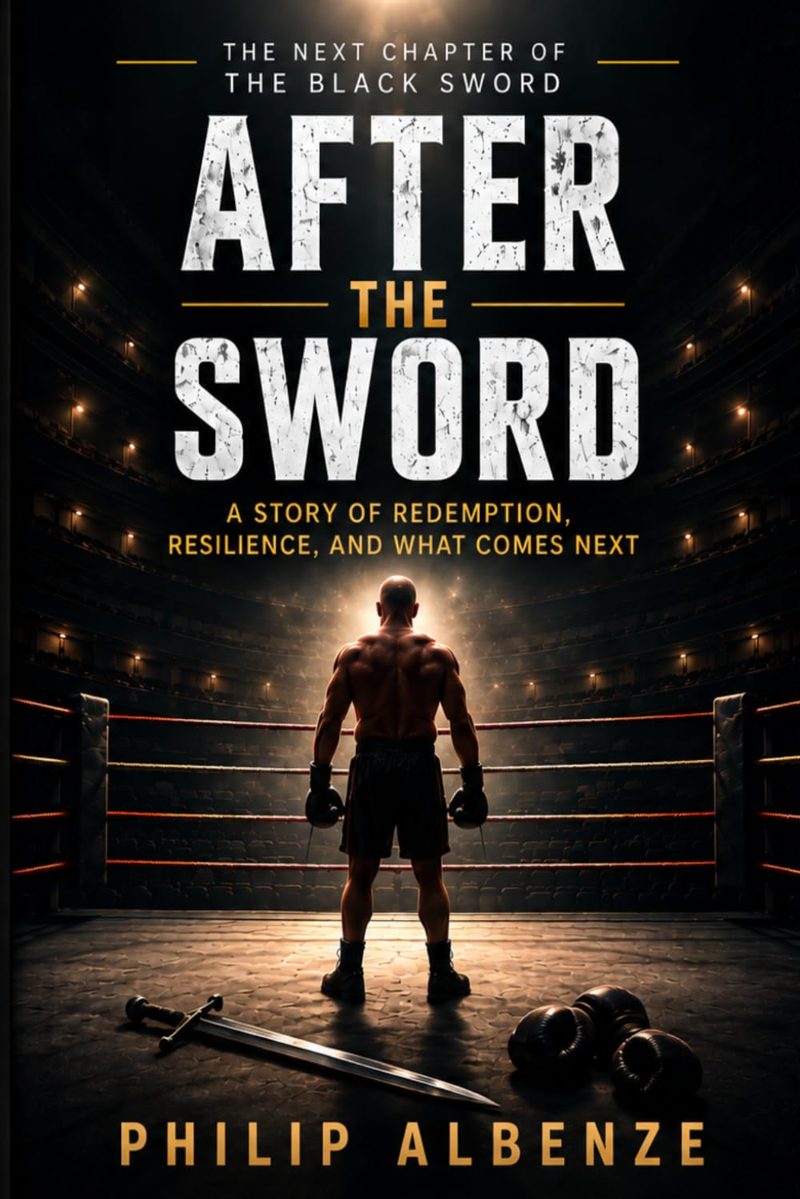
The next chapter of The Black Sword
A Story of Redemption, Resilience, and What Comes Next


